Argentina Essentials
A 2004 family-and-friends vineyard-investment adventure, with the essentials of Argentine Malbec, Mendoza, altitude, Andes irrigation and the country’s modern quality rise.
.jpeg)
Argentina was a brilliant experience for us because we went there with a very specific idea in mind: exploring the possibility of investing in a small vineyard project.

This was back in 2004, when the Argentine peso was extremely weak relative to the U.S. dollar and the country felt full of opportunity. We were convinced that Malbec was a grape with enormous potential. It was already thriving in Argentina at the time, and its reputation has only grown since then as quality has continued to improve.
We traveled with a small group of friends and family and had the adventure of a lifetime. In the end, we never bought into a vineyard property — although the idea still has a certain appeal. Maybe someday.

Why Argentina and Malbec became such a powerful combination
Malbec originated in France and remains one of the permitted grapes in Bordeaux, though today it is far more closely associated with Argentina.
Argentina gave Malbec a different stage on which to perform. In the high, dry vineyards near the Andes, the grape can achieve deep color, ripe fruit and generous texture while still retaining freshness when grown at the right sites.
The result is the style that helped put Argentina on the global wine map: dark-fruited, expressive red wines with plum, blackberry, violet and spice, often supported by smooth but substantial tannins.
Mendoza: the center of Argentine wine
Mendoza is the heart of the Argentine wine industry and the region most closely identified with Malbec.
The city sits east of the Andes, and the vineyards spread across a series of high-altitude areas where elevation plays a major role in wine style. The days can be intensely sunny, while nights cool quickly. That large day-night temperature swing helps grapes ripen fully without losing all of their acidity.
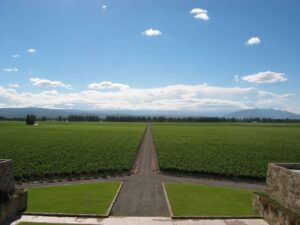
This is one of the reasons altitude matters so much in Argentina. As vineyards climb higher, temperatures fall and growing conditions change, often producing wines with more freshness, aromatic intensity and structure.
The Andes and irrigation
Mendoza is also remarkably dry. Without irrigation, large-scale viticulture would be difficult in many areas.
Historically, vineyards relied on meltwater from the Andes carried through an intricate network of irrigation channels. Modern producers increasingly use more precise drip-irrigation systems, but the underlying principle remains the same: the Andes are not just a dramatic backdrop — they are fundamental to the region’s ability to grow grapes.
Not all Mendoza Malbec tastes the same
One of the most important developments in Argentine wine has been the move away from treating Mendoza as a single uniform region.
Areas such as Luján de Cuyo, the Uco Valley and especially higher-elevation zones such as Gualtallary and Paraje Altamira have become increasingly important because they produce distinct expressions of Malbec.
Warmer sites can give broader, richer wines, while cooler and higher vineyards often emphasize floral aromas, acidity, minerality and firmer structure. This shift toward site-specific wines is one of the reasons the quality ceiling for Argentine Malbec has risen so much.
Argentina is more than Malbec
Malbec dominates the international conversation, but Argentina has much more to offer.
Cabernet Sauvignon, Cabernet Franc, Bonarda and Syrah can all perform well in the right places. Among white grapes, Torrontés is especially distinctive, producing intensely aromatic wines with floral and citrus notes.
Still, if you want one grape that explains Argentina’s modern wine identity, Malbec remains the obvious place to start.
Why quality improved so quickly
Argentina’s rise was not just about favorable economics or a fashionable grape. Producers invested heavily in better vineyard management, lower yields, temperature-controlled fermentation, improved oak use and more careful site selection.
International investment and expertise also helped accelerate the process. Over time, the best producers shifted from making simply ripe, powerful wines toward more precise expressions of place.
That evolution is part of what makes our 2004 trip so interesting in retrospect. We were there at a moment when the potential already felt obvious, but much of the quality story that now defines Argentina was still unfolding.
The Argentina Essentials video on this page gives the broader overview.
What to remember about Argentina
- Malbec is Argentina’s signature red grape, even though it originated in France.
- Mendoza is the country’s most important wine region.
- Altitude is a major quality factor, helping preserve freshness and shape wine style.
- The Andes provide both dramatic geography and essential irrigation water.
- Modern Argentine wine increasingly emphasizes specific subregions and vineyard sites, not just broad regional identity.
- Argentina also produces excellent wines from grapes such as Cabernet Franc, Cabernet Sauvignon and Torrontés.