Champagne Essentials
A family visit to Champagne, with the essentials of méthode traditionnelle, lees ageing, the key grapes, blending and why Champagne is distinct from other sparkling wines.
.jpeg)
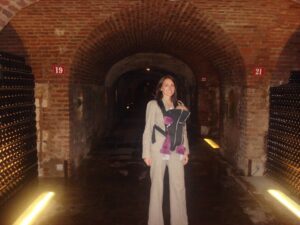
Champagne is a destination that works surprisingly well year-round because some of its most interesting attractions are underground, in the extensive chalk cellars where the wines are aged. If you are visiting Paris, it is also an easy region to add as a side trip, and we highly recommend it.
We visited more than ten years ago when our children were still very young, and it was well worth the trip. The region has a fascinating mix of grand houses, historic cellars and small producers, and being there gives you a much better sense of why Champagne is different from sparkling wine made elsewhere.
What makes Champagne different?
Champagne is not simply a style of sparkling wine. It is a legally protected wine from the Champagne region of France, made under detailed appellation rules governing where the grapes come from and how the wine is produced.
The production method is known today as the traditional method — méthode traditionnelle. Historically, it was often called méthode champenoise, but that term is reserved in many contexts for wines from Champagne itself.
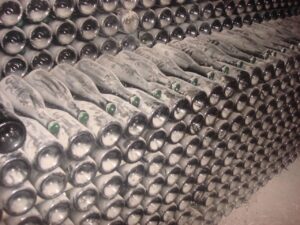
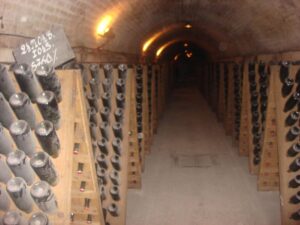
The defining step is a second fermentation in the bottle. A still base wine is bottled with yeast and sugar, creating a second fermentation that produces the bubbles. The wine then rests on the spent yeast cells, known as the lees, before disgorgement and final corking.
Where the brioche and yeasty character comes from
That extended contact with the lees is one of the reasons Champagne can develop flavors and aromas often described as brioche, bread dough, toast, biscuit or pastry.
The longer a wine spends ageing on its lees, the more pronounced these complex autolytic characters can become. This is a major part of the difference between basic sparkling wines made quickly and serious traditional-method wines given significant time in bottle.
The key grapes
The three grapes most closely associated with Champagne are Chardonnay, Pinot Noir and Meunier.
Chardonnay tends to bring acidity, finesse and citrus or floral character. Pinot Noir contributes structure and depth, while Meunier often adds fruitiness and approachability. Many Champagnes are blends of all three, though some wines are made entirely from Chardonnay — Blanc de Blancs — or from dark-skinned grapes such as Pinot Noir and Meunier — Blanc de Noirs.
Non-vintage, vintage and blending
One of Champagne’s defining traditions is blending. Most bottles are non-vintage, meaning they combine wines from more than one harvest in order to maintain a consistent house style from year to year.
Vintage Champagne is produced from a single harvest and is generally made only when a producer believes the year is worthy of being highlighted on its own. These wines often spend longer ageing and can develop additional complexity.
This emphasis on blending is one reason the producer matters so much in Champagne. Each house or grower makes choices about vineyards, grape proportions, reserve wines, ageing time and dosage that shape the final style.
Beyond the famous labels
Some Champagne names are iconic and instantly recognizable, but it is worth exploring beyond the best-known grandes marques.
There are many excellent smaller houses and grower-producers making distinctive wines, often from more narrowly defined vineyard sources. Champagne is rarely inexpensive, but lesser-known producers can sometimes offer excellent quality without the premium attached to the most famous luxury labels.
The key is not to assume that every bottle made by the traditional method will taste the same. Vineyard source, grape varieties, blending, lees ageing, dosage and producer philosophy all matter.
A region worth visiting
Part of the appeal of visiting Champagne is seeing the production process in person. The vast underground cellars beneath places such as Reims and Épernay make the ageing process tangible in a way that a label never can.
For our family, visiting when the children were young made the trip particularly memorable. It is one of those wine regions where the history, geography and production method all come together in a very visible way.
The Champagne Essentials video on this page gives the broader overview.
What to remember about Champagne
- Champagne is a protected appellation in northeastern France, not a generic term for sparkling wine.
- The wine is made using the traditional method, with a second fermentation in the bottle.
- Extended ageing on the lees helps create the brioche, toast and biscuit notes associated with many Champagnes.
- The principal grapes are Chardonnay, Pinot Noir and Meunier.
- Non-vintage Champagne is usually blended across harvests to preserve a house style, while vintage Champagne comes from a single year.
- Famous houses are only part of the story; smaller producers can offer distinctive and sometimes better-value wines.