Corks & Closures
The practical differences between natural cork, synthetic cork and screwcaps — and what closures do and do not tell you about wine quality.
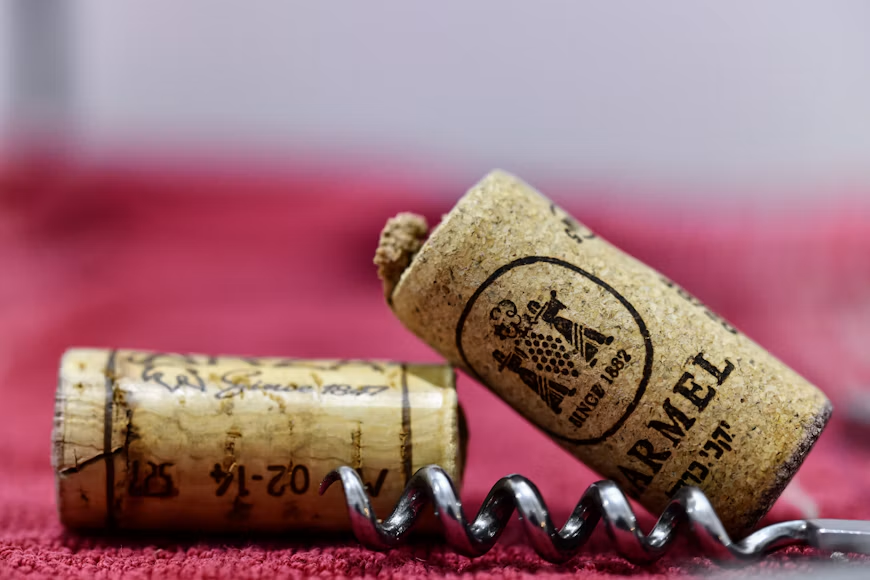
The closure on a bottle of wine has one basic job: protect the wine while allowing it to develop as intended. Natural cork still carries the strongest traditional association with fine wine, but it is only one of several effective options.
Natural cork
Natural cork is elastic, renewable and has been used for centuries. It works especially well for wines intended to age, but it is not flawless. The best-known problem is cork taint, most often associated with the compound TCA, which can mute fruit and create damp-cardboard or musty aromas.
Synthetic corks
Synthetic closures avoid cork taint and are consistent, but they vary in quality and are used most often for wines intended for relatively early drinking. Some can also be harder to remove or reseal.
Screwcaps
Screwcaps are not a sign of cheap wine. They provide a very reliable seal, eliminate cork taint from natural cork, and are widely used for high-quality wines, particularly in countries such as New Zealand and Australia.
Different screwcap liners can manage oxygen transmission differently, so the category is more sophisticated than the simple idea of “metal cap versus cork” suggests.
Does the closure tell you the quality?
Not reliably. Prestige, tradition and consumer expectations still influence closure choice, but excellent wines can be found under cork or screwcap. The producer and the wine matter far more than the closure alone.
The Corks & Closures video on this page gives the practical overview.
What to remember
- Natural cork is traditional and age-worthy but can occasionally suffer from cork taint.
- Screwcaps can protect high-quality wine extremely well and are not a sign of low quality.
- Synthetic closures are useful but are generally associated more with wines for earlier consumption.
- Judge the wine by the producer, region and bottle — not by the closure alone.