Germany Essentials
The essentials of Mosel Riesling: steep slate vineyards, cool-climate viticulture, dry and sweet styles, and why this region produces such distinctive wines.
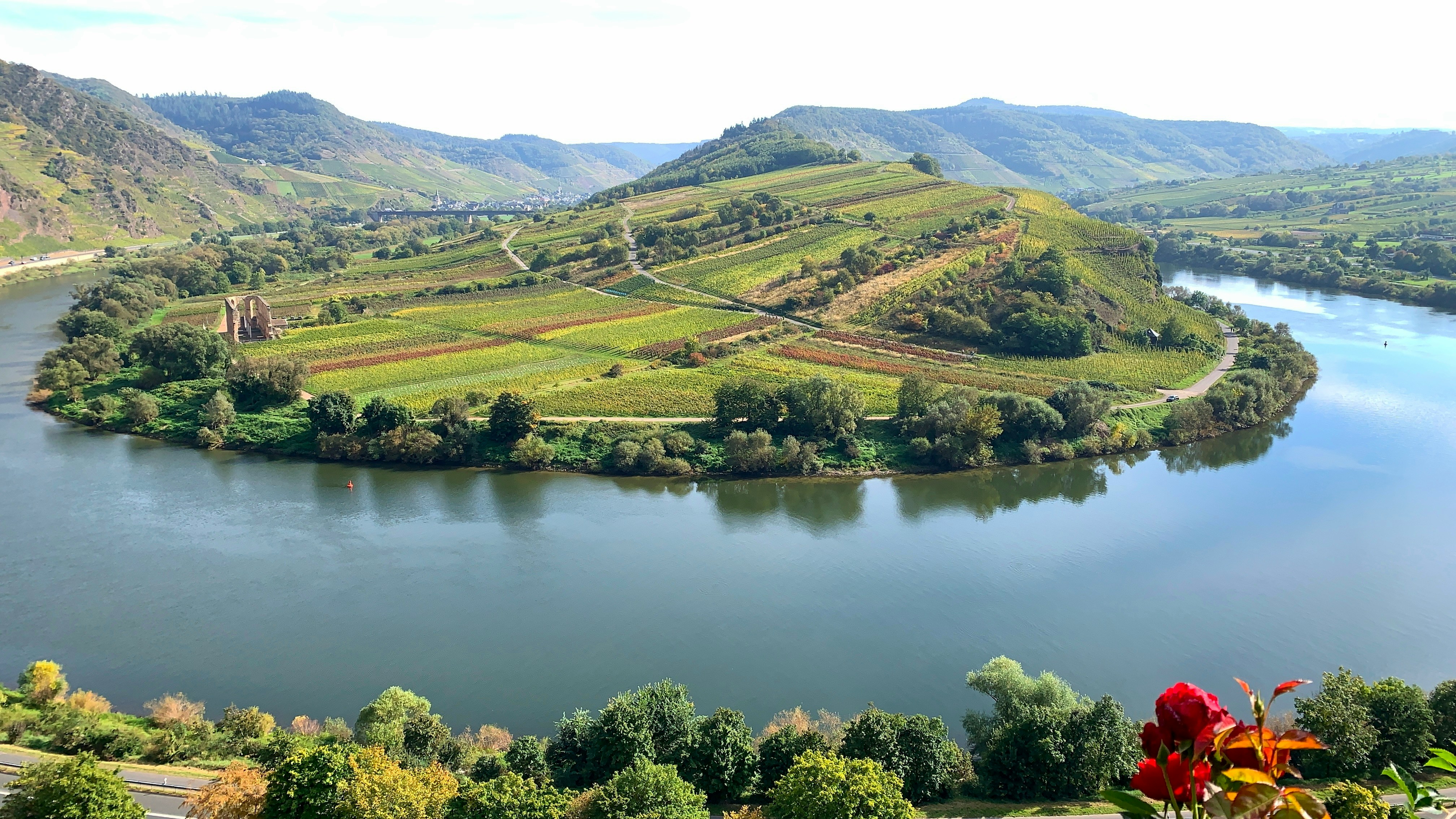
The Mosel wine region in Germany is one of the world’s great homes of Riesling. It is also one of the most visually dramatic wine regions we have visited.
The vineyards cling to incredibly steep slopes above the Mosel River, and in places the gradients are so severe that specialized rail systems and vineyard equipment are used to move people, grapes and supplies up and down the hillsides. Standing there, you get an immediate sense of how physically demanding winegrowing can be in this landscape.

Why the Mosel is so well suited to Riesling
The Mosel has a relatively cool climate, which helps Riesling retain its naturally high acidity and aromatic character. The steep, often south-facing slopes are crucial because they maximize exposure to sunlight, helping grapes ripen in a region where warmth can be limited.
The river itself also plays a role by moderating temperatures and reflecting light back toward the vineyards. In such a marginal climate, every small advantage matters.

Slate soils and steep slopes
One of the defining visual features of the Mosel is its rocky, slate-rich soil. In many vineyards, there seems to be almost more stone than earth.

These soils drain extremely well, forcing vines to send roots deep into cracks and fissures in search of water and nutrients. Dark slate can also absorb warmth during the day and release it slowly, helping grapes ripen in the cool climate.
Wine lovers often describe Mosel Riesling as having a distinctive mineral, stony or slate-like character. The precise scientific relationship between soil minerals and flavors in wine is more complicated than the language sometimes suggests, but there is no question that the combination of geology, drainage, slope, climate and vine physiology contributes to the region’s unmistakable style.
Riesling: much more than a sweet wine
In countries such as the United States, Riesling has often been associated with sweeter styles because many of the best-known exports historically contained noticeable residual sugar. That is only part of the story.
Riesling is one of the most versatile grape varieties in the world. In Germany it can range from bone-dry to intensely sweet, with many styles in between. What ties the best wines together is usually vivid acidity, strong aromatics and an ability to express site with remarkable precision.
Dry German Rieslings can be exceptionally refreshing and complex, often showing citrus, green apple, peach, floral notes and, with age, more savory and sometimes petrol-like aromas. They can be light in alcohol yet still feel intense because of their acidity and aromatic concentration.
Understanding sweetness on the label
German wine labels can be intimidating at first, but a few terms are especially useful. Trocken indicates a dry wine, while halbtrocken or related modern terms signal an off-dry style. Traditional Prädikat terms such as Kabinett, Spätlese and Auslese refer primarily to grape ripeness at harvest rather than automatically telling you how sweet the finished wine will taste.
This is one reason it is worth paying attention to the producer and the word trocken when you are specifically looking for a dry Riesling.
Why Mosel Riesling is distinctive
Mosel Riesling is often lighter-bodied and lower in alcohol than many other great white wines, but it can still have extraordinary intensity. That combination — delicacy, acidity, aromatics and precision — is one of the region’s signatures.
The Germany Essentials video on this page gives the broader overview.
What to remember about the Mosel
- Riesling is the defining grape of the Mosel.
- The region’s cool climate and steep slopes help preserve acidity while maximizing sun exposure.
- Slate-rich soils provide excellent drainage and contribute to the distinctive character associated with Mosel wines.
- German Riesling can be dry, off-dry or sweet; do not assume all Riesling is sweet.
- Look for trocken on the label when you want a dry German Riesling.
- The best Mosel wines combine lightness, high acidity, aromatic intensity and remarkable longevity.