Tuscany Essentials
Tuscany through repeated family travels, with the essentials of Sangiovese, Chianti, Vino Nobile, Brunello and the rise of the Super Tuscans.
.jpeg)
Tuscany has a big reputation, but there is a good reason for that. For us, it is one of the great food-and-wine regions of the world. We have explored it on many different trips, and it never seems to disappoint.

Whether you are staying in Florence, the busy Renaissance capital, or spending time in smaller towns such as Montepulciano, Siena and San Gimignano — or wandering farther off the beaten path — the region has an extraordinary ability to combine landscape, history, food and wine in one experience.
Sangiovese: the grape at the heart of Tuscany
Sangiovese is the defining red grape of Tuscany. It is naturally high in acidity, usually moderate to high in tannin, and often shows flavors of sour cherry, red plum, dried herbs, earth, leather and spice.
That acidity is one of the reasons Sangiovese works so well with Tuscan food. Tomato-based sauces, grilled meats, olive oil, aged cheeses and herbs all benefit from a wine that has enough freshness to keep the pairing lively.
Chianti, Vino Nobile and Brunello
Tuscany’s most famous Sangiovese-based wines are identified primarily by place rather than by grape name.
Chianti and Chianti Classico are the best-known examples. Chianti Classico comes from the historic zone between Florence and Siena and generally requires a higher proportion of Sangiovese than basic Chianti. Styles can range from bright and approachable to serious, structured and age-worthy.
Vino Nobile di Montepulciano is also based principally on Sangiovese, known locally as Prugnolo Gentile. Despite the name, it should not be confused with the Montepulciano grape grown elsewhere in Italy. Here, “Montepulciano” refers to the Tuscan town.
Brunello di Montalcino is made entirely from Sangiovese — traditionally referred to locally as Brunello — and is one of Italy’s most prestigious and age-worthy red wines. The best examples combine concentration with acidity, tannin and long-term complexity.
The rise of the Super Tuscans
In the second half of the twentieth century, some Tuscan producers began making ambitious wines that did not fit comfortably within the traditional appellation rules of the time. Some used international grape varieties such as Cabernet Sauvignon, Merlot and Cabernet Franc; others blended these grapes with Sangiovese.
These wines became informally known as Super Tuscans. The term is not an official legal classification. It is a market and stylistic term used for high-quality Tuscan wines that historically sat outside the traditional DOC/DOCG framework or pushed beyond its conventions.
Over time, Italian wine law evolved and new appellations emerged, particularly around Bolgheri on the Tuscan coast, where Bordeaux varieties perform exceptionally well.
Sassicaia, Ornellaia and Bolgheri
Sassicaia and Ornellaia are among the most famous wines associated with the Super Tuscan movement and with Bolgheri more broadly.
Sassicaia, based primarily on Cabernet Sauvignon with Cabernet Franc, became so important that it ultimately received its own dedicated appellation, Bolgheri Sassicaia DOC. Ornellaia is a Bordeaux-style blend and is one of the region’s benchmark wines.
These bottles can command very high prices and have a global following, but the broader lesson is more useful than the prestige names themselves: Tuscany is capable of producing world-class wine both from its traditional Sangiovese heritage and from international grape varieties.
Why Tuscany works so well for wine travel
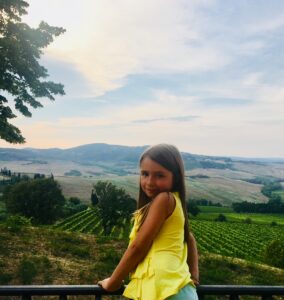
Tuscany is one of those places where wine makes more sense when experienced in context. The rolling hills, cypress-lined roads, medieval towns, olive groves and vineyards are not separate from the food-and-wine culture — they are part of it.

For us, the region’s appeal comes from that whole combination. A bottle of Chianti Classico or Brunello feels different after spending time in the landscape and eating the food that grew up alongside it.
The Tuscany Essentials video on this page gives the broader overview.
What to remember about Tuscany
- Sangiovese is Tuscany’s defining red grape.
- Chianti and Chianti Classico are Sangiovese-led wines, with Chianti Classico coming from the historic heartland between Florence and Siena.
- Vino Nobile di Montepulciano is Sangiovese-based; it is not made from the Montepulciano grape.
- Brunello di Montalcino is made entirely from Sangiovese and is one of Italy’s great age-worthy reds.
- Super Tuscan is an informal term, often associated with ambitious wines using Bordeaux varieties or nontraditional blends.
- Bolgheri, Sassicaia and Ornellaia are central names in the modern Tuscan wine story.