Wine Glasses
What wine glasses actually change, which shapes matter most, and how to choose a practical set without turning glassware into another complication.
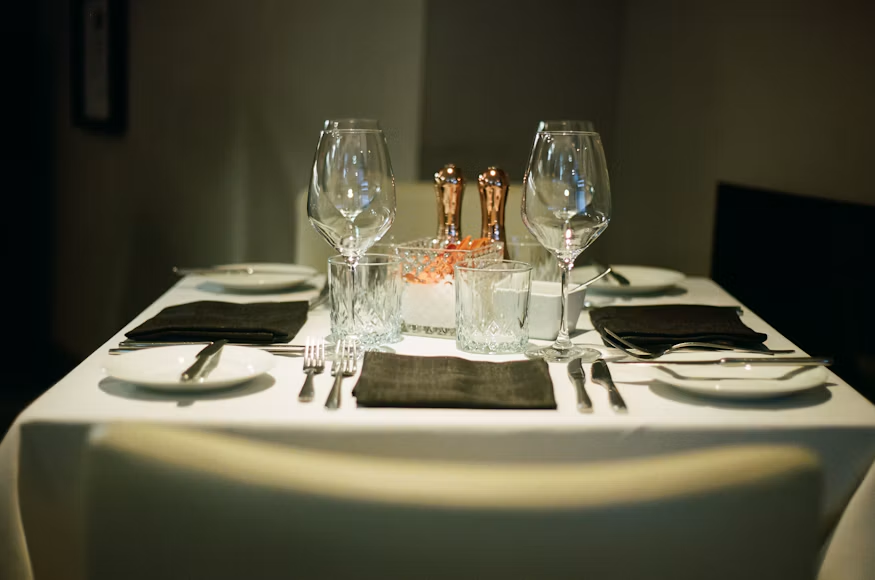
Wine glasses matter, but not enough to justify turning the subject into another source of anxiety. A good glass should help concentrate aromas, allow the wine to move easily, and feel comfortable in the hand.
Why shape matters
The bowl of a wine glass creates space for aromas to collect. A narrower opening can help direct those aromas toward the nose, while a larger bowl gives the wine more surface area and room to move.
This is why red-wine glasses are often larger than white-wine glasses, and why sparkling-wine glasses tend to be narrower.
Do you need a different glass for every grape?
No. Specialized glassware can subtly change how a wine presents itself, but most people do not need a cabinet full of grape-specific shapes.
A practical setup is one good universal wine glass, or perhaps one slightly larger glass for reds and one smaller glass for whites. For sparkling wine, a tulip-shaped glass often gives more aromatic expression than an extremely narrow flute while still preserving bubbles well.
What matters most
Cleanliness matters more than luxury. Residual detergent, cabinet odors or stale water can interfere with aroma. Thin rims are pleasant, but expensive crystal is not required to enjoy wine properly.
The Wine Glasses video on this page gives the practical overview.
What to remember
- A good glass should provide room for aromas and allow the wine to move.
- You do not need a separate glass for every grape variety.
- A universal glass — or one red and one white shape — is enough for most people.
- For sparkling wine, a tulip-shaped glass is a useful compromise between aroma and bubble retention.
- Clean, odor-free glassware matters more than brand or price.